Investor's Cuba
You don't invest in a flag. You invest in rules, in electric light, in a title a court will defend, and in whoever collects on the contract when the ship docks.
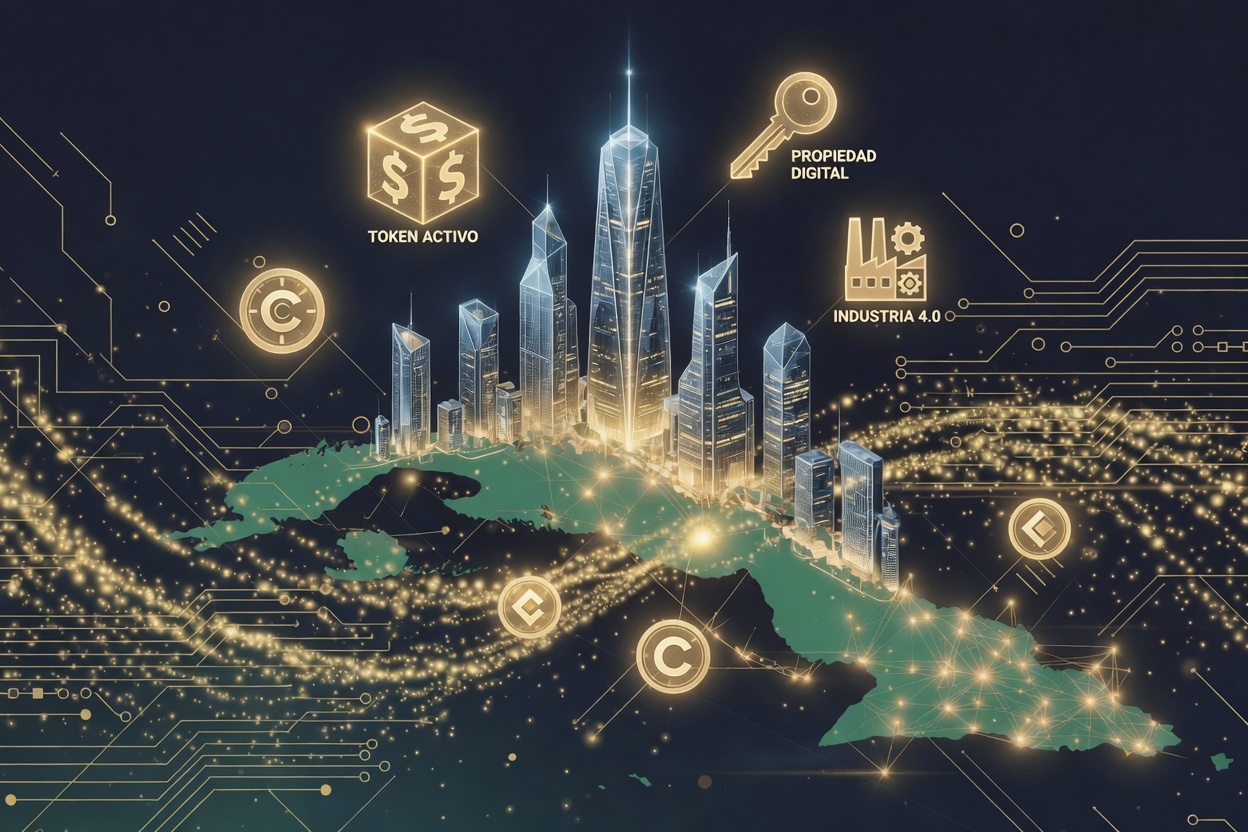
This file doesn't celebrate a headline or sell a magic ticker. It doesn't say "Free Cuba tomorrow = rich." It's a conditional map: what would actually have to move, in what order, and who would collect first if —and only if— there were real opening. Three starting facts, unadorned:
The starting point
The most common mistake is analyzing Cuba from wishful thinking. Faro starts from the real state: broad sanctions, restricted flows and a state (military-business) apparatus that controls the sectors an investor would want to touch. Opening isn't a switch: it's a sequence of decisions that can advance or reverse.
| Lever | Maximum pressure (today) | Real opening (hypothesis) |
|---|---|---|
| U.S. decision | Sanctions in force; restricted licenses. | General licenses, not speeches: legal permission to operate. |
| Rules on the island | State control; foreign investment kept under tutelage. | Stable legal framework, enforceable contracts. |
| Energy | Fragile grid, recurring blackouts. | Reliable generation: no power, no industry or hotel. |
| Claims / titles | Unresolved 1959–60 claims. | A mechanism that recognizes or compensates property. |
| Who executes | State conglomerate as the obligatory partner. | Private operators with clear accountability. |
The Faro rule — don't measure the rhetoric: measure which layer moved. Did a speech, a license or a title change? Only the third moves structural capital.
Levels of opening
Not every "opening" is equal. There are three levels, and money behaves differently in each.
Level A
Partial reliefTravel, remittances, telecom. Fast flow of people and small money. Reversible with one signature.
Level B
Commercial normalizationTrade, infrastructure, energy, hotels. Operating capital enters, but the local partner and the claims remain in doubt.
Level C
Institutional transitionProperty, courts, structural capital and a possible "exchange 2.0". It's the only level where money stays.
| Level | Typical horizon | Who collects first | Main risk |
|---|---|---|---|
| A · Relief | Immediate | Cruises, airlines, remittances, telecom. | Reversible by decree. |
| B · Normalization | 1–4 years | Hotels, energy, materials, logistics. | Opaque state partner; unresolved claims. |
| C · Institutional | 3–10+ years | Property, industry, finance, registry. | That it never arrives; that it reverses. |
Mandatory question — for any piece of news: "which level actually activated?" If it's A, don't pay as if it were C.
Investment scenarios by phase
| Phase | Horizon | What moves | Level that enables it |
|---|---|---|---|
| PHASE 1 Liquidity and people | 0–18 months | Travel, consumption, remittances: money that flows without buying assets. | Level A |
| PHASE 2 Minimal infra | 1–4 years | Energy, ports, materials, formal hospitality, agriculture. | Level B |
| PHASE 3 Structural capital | 3–10+ years | Titles, industry, asset registry, Florida–Cuba corridor. | Level C |
Golden rule — don't pay Phase 3 multiples for Phase 1 assets. The market, faced with a headline, tends to price the dream (Phase 3) when only the flow (Phase 1) has just activated. That's where money is lost.
Sectors that collect first
| # | Sector | Phase | Key dependency |
|---|---|---|---|
| 1 | Tourism and transport | 1 | Travel permission (U.S. license). |
| 2 | Energy | 2 | Reliable generation; no power, nothing. |
| 3 | Telecom and payments | 1 | Connectivity and remittance rails. |
| 4 | Materials and logistics | 2 | Construction and supply chain. |
| 5 | Agriculture and food | 2 | Land, inputs and export rules. |
| 6 | Ports and trade | 2 | Customs, dredging, port operator. |
| 7 | Selective mining | 3 | Nickel/cobalt; concessions and titles. |
| 8 | Registry, finance, possible exchange | 3 | Rule of law and property. |
Impact on the emerging Caribbean
A Cuba that opens isn't just an opportunity: it's a regional reordering. Tourism, capital and headline attention get redistributed. Whoever already operates nearby —Dominican Republic, Jamaica, Bahamas, Panama, Florida— wins or loses depending on how well they read the board.
| Market | Likely effect if Cuba opens |
|---|---|
| Dominican Rep. | Direct tourism competition; but also a hub of operators with Caribbean experience. |
| Jamaica | Pressure in the same beach segment; the big hotel operators rebalance. |
| Bahamas | Proximity to Florida and the cruises; a transshipment node. |
| Puerto Rico | Logistics and financial base under the U.S. flag; a possible platform. |
| Guyana | Another magnet for regional capital (oil); competes for the investor's attention. |
| Panama | Canal and logistics-financial hub; benefits from greater Caribbean trade. |
| Florida | The node. Gateway for capital, diaspora, cruises, flights and logistics. |
Two crossing forces: the headline diversion (fashionable capital runs to what's new) versus the institutional alternative (serious capital stays where there are rules). It also changes the perception of regional risk and the map of migration and remittances.
Memory of capital: the Havana Stock Exchange
Before 1959, Cuba was not a financial vacuum. It had a Stock Exchange in Havana, listed companies and foreign capital —above all American— operating at large scale. A real economy, though dangerously dependent on sugar: when the price of sugar trembled, the whole island trembled.
The companies of the old capital
- Cuban Electric Company — the utility; its claim is the largest certified (~$267–268M).
- Cuban Telephone (ITT) — the phone company, an ITT subsidiary.
- The Cuba Company — railroads and sugar (Van Horne's empire).
- Sugar mills — dozens of mills, the export heart.
- Tobacco and banking — global brands and banks with real presence.
The nationalization (1959–60)
The State expropriated foreign and domestic assets. The U.S. created the Foreign Claims Settlement Commission, which certified ~5,900 claims for a principal of ~$1.9B (of the era) — with accrued interest, a figure far higher today. Those claims have not been resolved.
The read — the claims are the invisible mortgage on any serious opening: whoever invests over a claimed asset inherits the lawsuit. The current vacuum is political and about property rights, not cultural. Cuba knows capital; what's missing is the rule that protects it.
How to position
You don't buy "Cuba". You buy whoever collects when Cuba moves. Exposure is always indirect and in layers.
The layers of exposure
- Florida gateway: capital and logistics pass through Miami.
- Natural-exposure tickers: cruises, airlines, hotels.
- Diaspora with execution: those who have the network to actually operate.
- The 5-question filter: right, custody, law, buyer, who rules.
- Timing by phase: enter in the right phase, not on the headline.
Practical order
- Confirm which level activated (A, B or C).
- Locate the real phase (1, 2 or 3), not the dreamed one.
- Pick the sector that collects first in that phase.
- Find the ticker with genuine exposure, not a facade.
- Size by risk: reversible = small position.
What to avoid — facade companies, opaque joint ventures with the state conglomerate, ignoring the claims, and paying a Phase 3 valuation for a Phase 1 asset.
Stocks and names with exposure
Method note — there's no pure "Cuba ETF". Everything that follows is indirect exposure: global companies that collect more if Cuba moves, not bets on "Cuba" as an asset. Each symbol links to its analysis on Faro.
| Symbol | Company | Phase | Route of exposure |
|---|---|---|---|
| Cruises — they collect on day 1 | |||
| RCL | Royal Caribbean | 1 | New calls in Havana; Miami base. |
| CCL | Carnival | 1 | Largest Caribbean fleet; immediate itineraries. |
| NCLH | Norwegian Cruise Line | 1 | Direct Caribbean exposure; Miami headquarters. |
| Airlines — the air bridge | |||
| AAL | American Airlines | 1 | Miami hub; the natural airline to Cuba. |
| DAL | Delta | 1 | Routes restored fast if there's a license. |
| UAL | United | 1 | International network ready to scale. |
| CPA | Copa Holdings | 1 | Panama hub; connector for the whole Caribbean. |
| Hospitality — Phase 2, when there's energy and rules | |||
| MAR | Marriott | 2 | Operated in Cuba before; brand and management. |
| H | Hyatt | 2 | Formal hotel expansion under Level B. |
| Florida energy and infrastructure — Phase 2/3 | |||
| NEE | NextEra Energy (FPL) | 2 | The Florida utility; the corridor's energy node. |
| AES | AES Corp | 2 | Generation across the Caribbean and Latin America. |
| Materials and logistics — the rebuild | |||
| VMC | Vulcan Materials | 2 | Aggregates and cement: this is what you build with. |
| MLM | Martin Marietta | 2 | Construction materials at scale. |
| Agriculture and food — Phase 2 | |||
| BG | Bunge | 2 | Agribusiness and grains; exports to the island. |
| ADM | Archer-Daniels-Midland | 2 | Food and agricultural inputs. |
| Telecom and payments — remittances and connectivity | |||
| AMX | América Móvil | 1 | Latin American telecom; a natural candidate. |
| MA | Mastercard | 1 | Payment and remittance rail if the flow opens. |
| V | Visa | 1 | The other toll on payments and tourism. |
Three rules for this block
- There's no pure play: all exposure is indirect and diluted.
- Phase 1 ≠ Phase 3 valuation: a cruise line debuting a port call isn't worth what an industry with titles is.
- Claims can topple paper winners: the most "obvious" asset may have been claimed since 1960.
Risks that break the map
| Risk | Signal to watch | Consequence |
|---|---|---|
| Facade | A "Cuban" company with no real operation. | Capital trapped in a shell. |
| Opaque state partner | Mandatory JV with the military-business conglomerate. | The foreign operator neither controls nor collects. |
| Claims / titles | Asset with a pending 1959–60 claim. | Inherited lawsuit; the "winner" loses in court. |
| Political reversal | Change of administration or decree. | The license closes; the flow is cut off suddenly. |
| Broken energy | Blackouts, a grid without investment. | No hotel or industry: Phase 2 doesn't start. |
| Opacity | No reliable data, no public registry. | Impossible to value; serious capital doesn't enter. |
| Phase error | Paying Phase 3 in a Phase 1 environment. | Overpayment; loss when the headline cools. |
What this secret holds
This file holds a conditional map, not a promise. It doesn't know whether Cuba will open or when. It knows how to read it if it happens —and how not to be the one who pays for the dream at the price of reality—.
- You don't invest in a flag. You invest in rules, energy and enforceable titles.
- Measure the layer, not the speech. Rhetoric, license or title: only the third moves structural capital.
- Ask the level. A, B or C? The right price depends on the answer.
- Respect the phase. Don't pay Phase 3 for Phase 1 assets.
- The claims rule. Claimed property is an invisible mortgage.
- Exposure is indirect. Buy whoever collects when Cuba moves.
- Size by reversibility. What one signature can undo goes small.
If there's only a headline, there's no secret: there's noise. If there's a level, a phase, a sector and an invoice in hard currency, then there's a map. Investor's Cuba isn't a dream on the wall. It's architecture — or it isn't.
The full book, for you
The Laboratory Island
From the communist experiment to the digital architecture of the new order. The essay that gives the historical and power framework behind this secret — complete, in PDF.
Take it to the Faro tools
Original files
The research folders that underpin this file, in their original form.